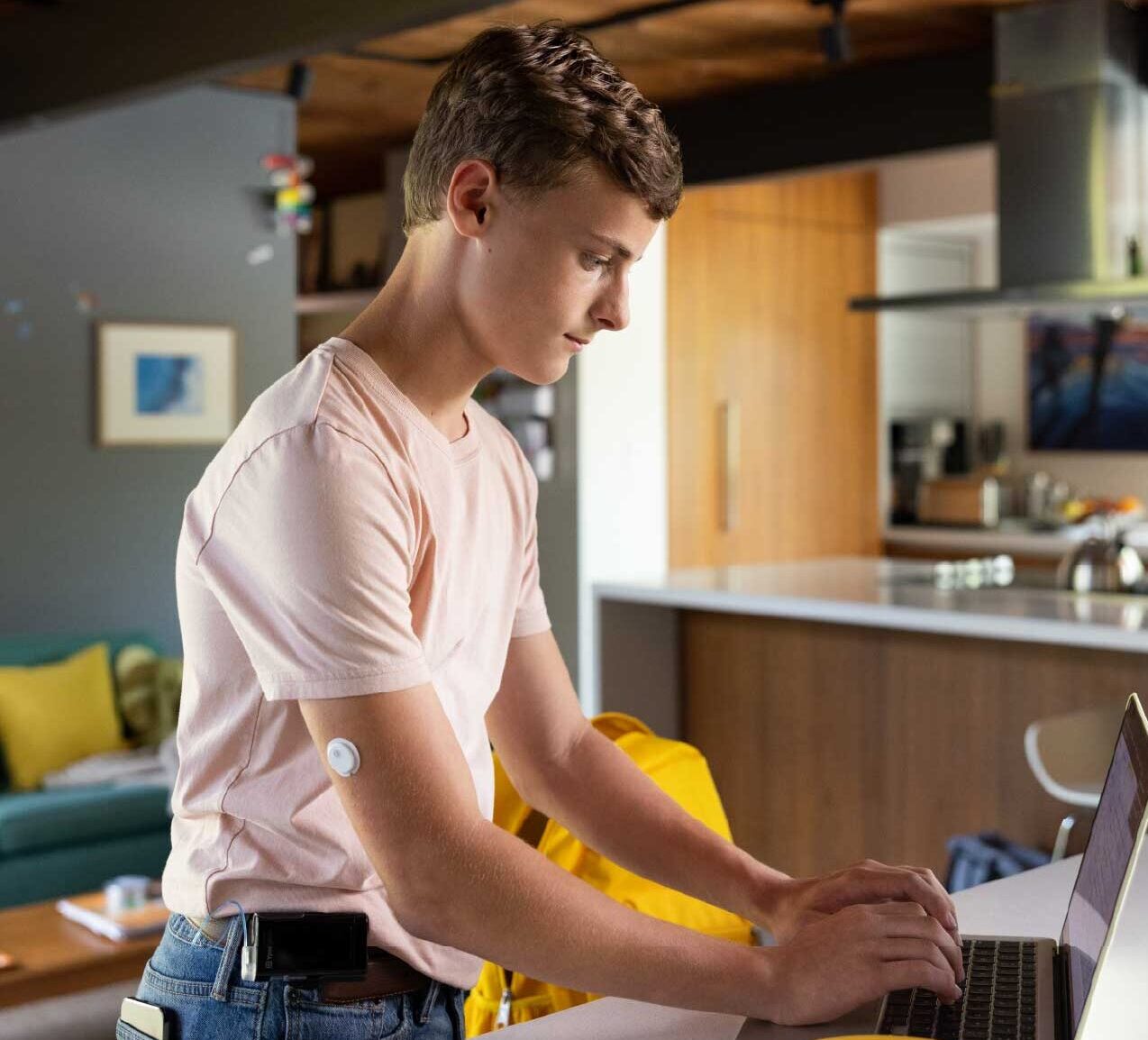


How do we keep kids physically active when the online world is so compelling? And what about children with type 1 diabetes, who may depend on their devices for medical reasons? A new children’s book from scientist Niraj Lal offers some insights, writes ZOE DELEUIL.
Any parent who grew up in the pre-digital era has probably found themselves telling their child to put down their tablet and go draw a picture. Right before picking up their own smartphone to check a message and then getting diverted by a cooking reel.
We’re all increasingly aware of how much time we spend online, and how skilful Big Tech is at keeping us staring at our small glowing screens. There’s no doubt that technology has many positives – connectivity and community being just two. The linking of smartphones with diabetes technology has been a game changer, and in a state as vast as Western Australia, both Telehealth and our Diabetes WA Connect service depend on a reliable internet connection.
All this being said, learning to manage screentime is now a necessary skill for healthy children and teens. One reason for this is that when kids are gaming or scrolling social media, they are physically inactive, and sitting down for long periods is not good for anyone.
Long-term health risks include type 2 diabetes, heart disease, depression and anxiety, and that’s before we talk about the constant advertising for ultra-processed food that kids are bombarded with while online, along with exposure to other potentially harmful messages and communities.
Finding the balance
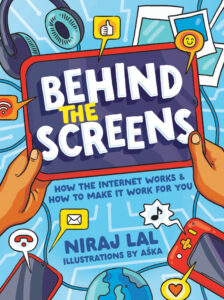
To get kids thinking about how screens can be one healthy part of a full life, scientist Dr Niraj Lal and comic artist Aśka have collaborated on a new graphic book – Behind the Screens – how the internet works and how to make it work for you, that can help both adults and children navigate the online world with greater confidence and awareness.
Dr Lal suggests that rather than being frustrated with kids for being so attached to their devices, we focus on giving them tools to manage technology. His approach is not anti-internet because, let’s face it, there’s no going back. But his book aims to give kids the information they need about social media use, staying safe online and finding the right balance between scrolling and being active – all around the time they get their first smartphone.
What about kids who need their phones to manage health conditions?
For children and teenagers living with a medical condition such as type 1 diabetes, digital monitoring technology can be incredibly empowering. It helps them stay active and mobile while still receiving the information and alerts that keep them healthy, in ways that work best for them.
Dr Lal suggests not sweating over metrics, such as hours of screen time, because this doesn’t take into account the time someone with diabetes might spend monitoring their blood glucose, for example.
The first priority, he says, is to be as safe and healthy as possible. He suggests that, as adults, we can support this by gaining a better understanding our own use of devices, so that we can encourage our kids to do the same.
Observe your engagement with tech – what you need to do, what you don’t need to do, what you find yourself doing with tech and when. This can be tricky with smartphones because they do so many things. Often, we pick them up for one thing – like checking the time – and then find ourselves mindlessly scrolling or checking our feeds.
Perth teenager Karina, who lives with type 1 diabetes, says that she has learned to manage her phone in her own way. ‘I think it depends on the environment you’ve grown up in and how much access to technology you’ve been given. I use my phone when I need to, and my parents don’t limit my time.’
She believes that, like many teenagers, she has learned to find the right balance in her own way. ‘I will look at my phone for social reasons and then check my blood glucose levels while I’m there. I also have alarms on my phone, and I know they will alert me if I need them to. I do rely on my phone for that, but I can manage it.’
Her mother Julie agrees. ‘It’s up to parents to model their use of technology appropriately, by not having phones at the dinner table and so on. We allow Karina to keep her phone in her room overnight, and we have to trust her. That’s the only thing that’s changed. With children with type 1 diabetes you need to build that trust and respect around diabetes management, and technology is now part of that.’

Dr Lal’s tips for managing tech with a medical condition
- I’m not a health expert, but if you’re using your smartphone for diabetes monitoring and keen to stay healthy with your screen use, you could keep blood glucose monitoring information on your home screen or lock screen, so you can quickly see what you need to without opening up your whole device.
- See if you can set up alerts and notifications in a way that works best for you – your diabetes educator can help with this.
- ‘Brick’ apps, Apple Screen Time and Google Family link can all help with managing phone use and controlling when and how you use certain apps.
- If your CGM and other diabetes tech aren’t giving you the flexibility you want, let the providers know. They have a vested interest in making them work for you.
- If it’s hard on your own, have a chat to people with similar experiences, or talk to your health team, or a good advocacy organisation – like Diabetes WA!
- Remember, you’re going to be the expert on what works for you – the tech should be there to help you.
Do you have a question about diabetes technology?
Call the Diabetes WA Helpline on 1300 001 880 to speak to one of our friendly diabetes educators, or come along to our next Type 1 Tech Night, where you can learn about the latest devices.