

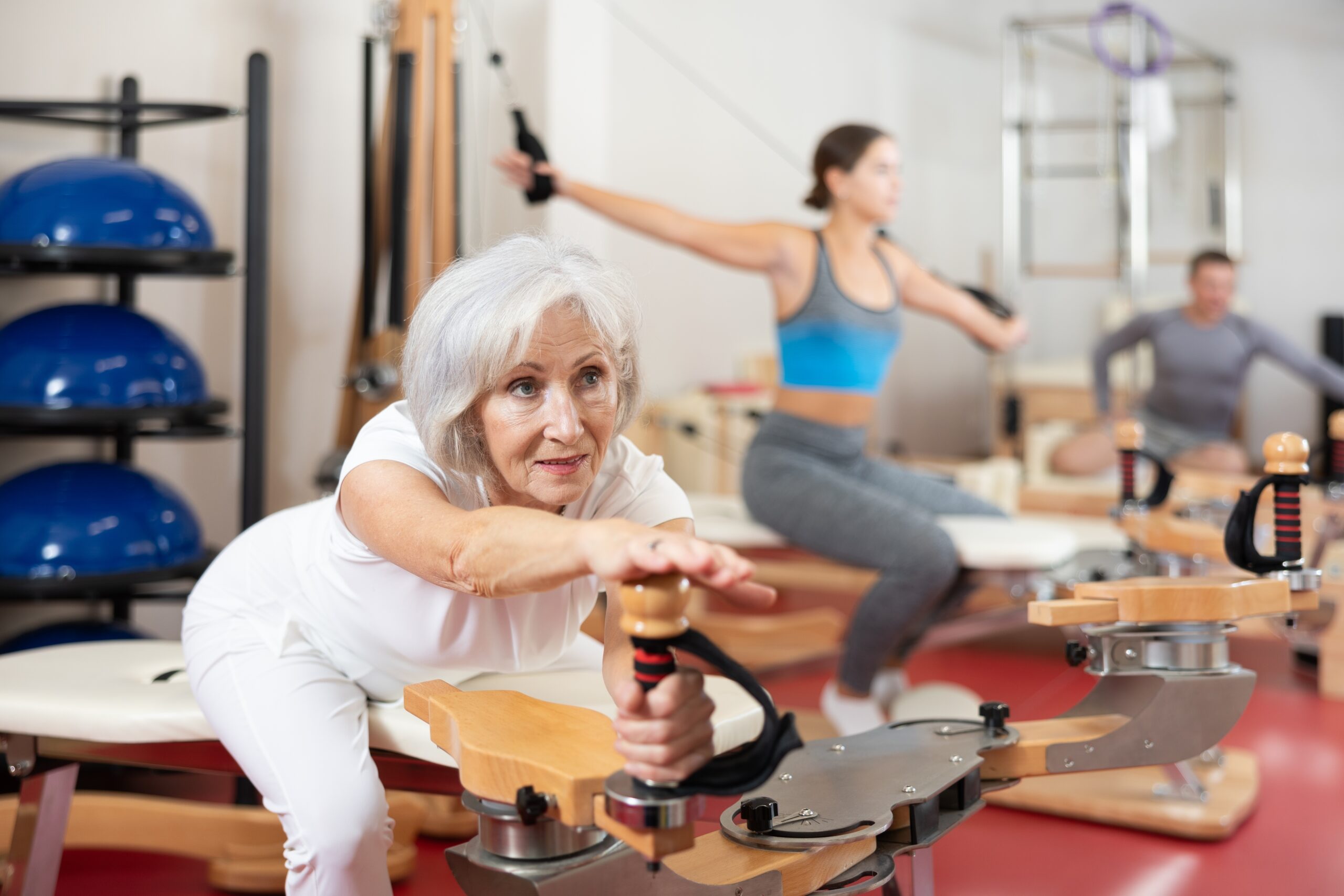
Whether you’re looking to build strength, recover from an injury, improve your posture or simply move better, Reformer Pilates offers something for almost everyone, writes exercise physiologist GEORGINA KEOGH-FISHER.
Have you noticed a Reformer Pilates studio popping up near you? You’re not alone. This popular form of exercise has taken the fitness world by storm for good reason.
What is Reformer Pilates?
Reformer Pilates is a form of resistance exercise that you do on a specialised machine called a reformer. The machine features a sliding carriage attached to adjustable springs, pulleys and ropes that create resistance as you move through a variety of controlled exercises.
Unlike traditional weight training, the resistance comes from the springs rather than heavy weights. This makes Reformer Pilates a low-load form of exercise – gentle on the joints while still providing an effective workout.
Why is it so popular?
One of the biggest advantages of Reformer Pilates is that it’s suitable for people of all fitness levels. Because the exercises are low impact and the resistance can be adjusted, it’s commonly used in rehabilitation programs for people who are recovering from injury or managing persistent pain.
It’s also an excellent option for beginners who want to improve their strength and confidence before progressing to heavier resistance training.
What does Reformer Pilates improve?
Because Reformer Pilates typically uses lighter resistance for higher repetitions, it primarily develops your muscular endurance, which is your muscle’s ability to keep working without becoming fatigued. This helps make everyday activities, such as climbing stairs, carrying groceries, gardening or playing with children and grandchildren, easier.
In addition to endurance, it improves your muscles’ ability to use oxygen efficiently, helping delay fatigue during physical activity. Reformer Pilates also improves your balance, posture and coordination. It places a strong emphasis on controlled movement, trunk stability and body awareness, which improves neuromuscular control, the communication between your brain, nerves and muscles, giving you greater efficiency and stability in your movements.
This is valuable for everyone, but particularly for older adults looking to maintain their independence and reduce their risk of falls. You might not think of Pilates as cardiovascular exercise, but a faster-paced class that keeps your heart rate elevated can also improve your cardiovascular fitness.
What does the research say?
Research continues to demonstrate that Reformer Pilates offers a wide range of health benefits. Studies have shown improvements in body fat percentage and muscle mass is overweight and obese women, improved trunk and back muscle endurance and improved strength in middle-aged and older women, along with improved flexibility and reduced symptoms of anxiety and depression.
For people living with chronic low back or neck pain, Reformer Pilates has been shown to increase participation in physical activity, improve confidence in managing persistent pain, reduce fear of movement and decrease fatigue. These benefits can help people return to activities they enjoy while feeling more confident in their movement.
Can Reformer Pilates improve bone health?
The evidence is currently mixed. There isn’t enough high-quality evidence to conclude that Reformer Pilates alone significantly improves bone mineral density or reduces falls.
To stimulate bone growth, bones require sufficient mechanical loading through higher resistance or impact activities. Because Reformer Pilates generally uses lower loads, it may not provide enough stimulus on its own. However, research suggests that combining Reformer Pilates with other forms of exercise, including resistance training, weight-bearing aerobic exercise, balance training and trunk stability exercises, can improve bone health and help reduce fracture risk.
What about diabetes and heart health?
Emerging research indicates promising benefits for metabolic health, with studies showing that Reformer Pilates may improve glucose uptake after exercise, improve HbA1c levels, reduce total cholesterol, lower triglycerides and reduce LDL or ‘bad’ cholesterol. These benefits make Reformer Pilates a valuable addition to an overall healthy lifestyle, particularly for people living with, or at risk of, chronic health conditions including diabetes.
Does Reformer Pilates meet the physical activity guidelines?
For beginners, people returning to exercise, or those managing pain or injury, reformer pilates can serve as an excellent strengthening activity. Australian physical activity guidelines recommend that adults aim for at least 30 minutes of moderate to vigorous physical activity on most days and two or more strength-training sessions each week. It’s also recommended to aim for balance, coordination and mobility activities on three or more days each week and several hours of light physical activity throughout the week.
However, for most healthy adults, Reformer Pilates alone does not meet the recommendations for strength training. Traditional strength training uses heavier loads with fewer repetitions to maximise muscle strength and build muscle mass. While Reformer Pilates develops muscular endurance and movement quality, combining it with resistance training provides the greatest overall health benefits.
Think of them as the perfect team: Reformer Pilates builds stability, control, flexibility and endurance, while strength training develops muscle strength, bone health and power.
How do I get started?
If you’re new to exercise, living with pain, managing diabetes or unsure which type of exercise is right for you, speaking with a qualified health professional is a great first step to building an exercise program.
An accredited exercise physiologist can design an exercise program tailored to your goals, medical conditions and fitness level while ensuring you exercise safely, particularly if you’re managing blood glucose levels or diabetes-related complications.
Looking for expert guidance?
Here at Diabetes WA, accredited exercise physiologist and diabetes educator, Georgie, is trained in both mat and Reformer Pilates.
Whether you’re recovering from injury, managing a chronic condition or simply looking to move better and feel stronger, Georgie can help you find the right exercise program for your needs.
Contact our clinic on 1300 001 880 to book an appointment.

