

Would you like to feel more confident in managing your diabetes? Our SMARTs programs can help you build the skills you need, writes SHERYL MOORE.
Here at Diabetes WA, we’ve learned over more than sixty years of supporting people living with diabetes that simply telling you what to do when it comes to diabetes self-management can understandably lead to frustration and disengagement.
When we developed the SMARTs programs back in 2015, we wanted to create a friendly, non-judgemental space that would build people’s confidence along with their ability to manage their diabetes.
This is why, when we deliver a SMARTs program, we don’t stand at the front of the room and give you a lecture. Instead, we take a ‘guide on the side’ approach, supporting you to work through the program.
The SMARTs philosophy
We believe that every person living with diabetes is the expert in their own life and will bring valuable knowledge and experience to the group.
Our key goal when we run a program is to build your own belief, or self-efficacy, in your ability to manage your diabetes. This is because we know that self-efficacy drives behaviour change, and behaviour change can lead to better health outcomes.
Self-efficacy determines whether you try, how you feel when you are trying, how you respond to setbacks and whether you maintain a behaviour long term – whether that is healthy eating, footcare, taking your diabetes medications or getting regular exercise.
We know that people with strong self-efficacy have a better sense of wellbeing, while those with lower self-efficacy can feel less optimistic, which may have a negative impact on their diabetes management. We want people to leave a SMARTs session with a stronger sense of their own abilities, so we encourage participants to get involved in the session rather than being ‘educated.’
With this approach, we see people feeling more confident in managing their diabetes. Ideally, people will carry this expanded self-belief from the program and into their daily life.
Building self-efficacy
Our programs strengthen self-belief by working on four key areas:
Skills mastery involves having the opportunity to practise a task and experience success, often by breaking it down into smaller, achievable steps.
Role modelling comes from seeing people who are similar to you successfully complete a task. By keeping groups fairly small, we ensure there’s a diverse mix of experiences and backgrounds, while not letting the group get so big that people aren’t able to get involved.
Verbal persuasion, or encouragement, happens naturally in a small supportive group. This might come from getting positive feedback from others and having any unhelpful beliefs challenged, which can build your confidence to try new tasks and manage setbacks.
Finally, our emotional and physical reactions can either support or hinder diabetes self-management. Feelings such as stress, anxiety, frustration or confusion may act as barriers to looking after yourself.
In our workshops, we actively encourage you to explore your feelings to help you recognise the impact your emotions might have on managing your diabetes.
Bringing the group together
As facilitators, we always work to create an environment in which participants feel supported, capable and confident. We do this by checking in, going at the right pace and encouraging people to share knowledge with each other.
We encourage you to identify what matters most to you so you leave with a practical action that you feel confident to try out, as well as thinking about any barriers that might get in the way of achieving it.
Our SMARTs programs go beyond sharing information about diabetes. By combining information with strategies that build self-efficacy, they help you move beyond knowing what to do to actually feeling capable of doing it.
Find a SMARTs program near you
You can see all our upcoming programs on our Programs and Education page.
These free programs complement individual diabetes education and are provided in local community centres. You can bring a support person if you like.
FootSMART helps you care for your feet and reduce your risk of diabetes-related foot problems. Learn what to check, how to build a simple foot care routine, how to choose footwear and when to ask for help. For people living with type 1 or type 2 diabetes.
CarbSMART will help you understand carbohydrates and how they affect blood glucose levels. Learn how to choose quality carbs, manage portions and enjoy food in a way that works for you. Best for people living with type 2 or gestational diabetes.
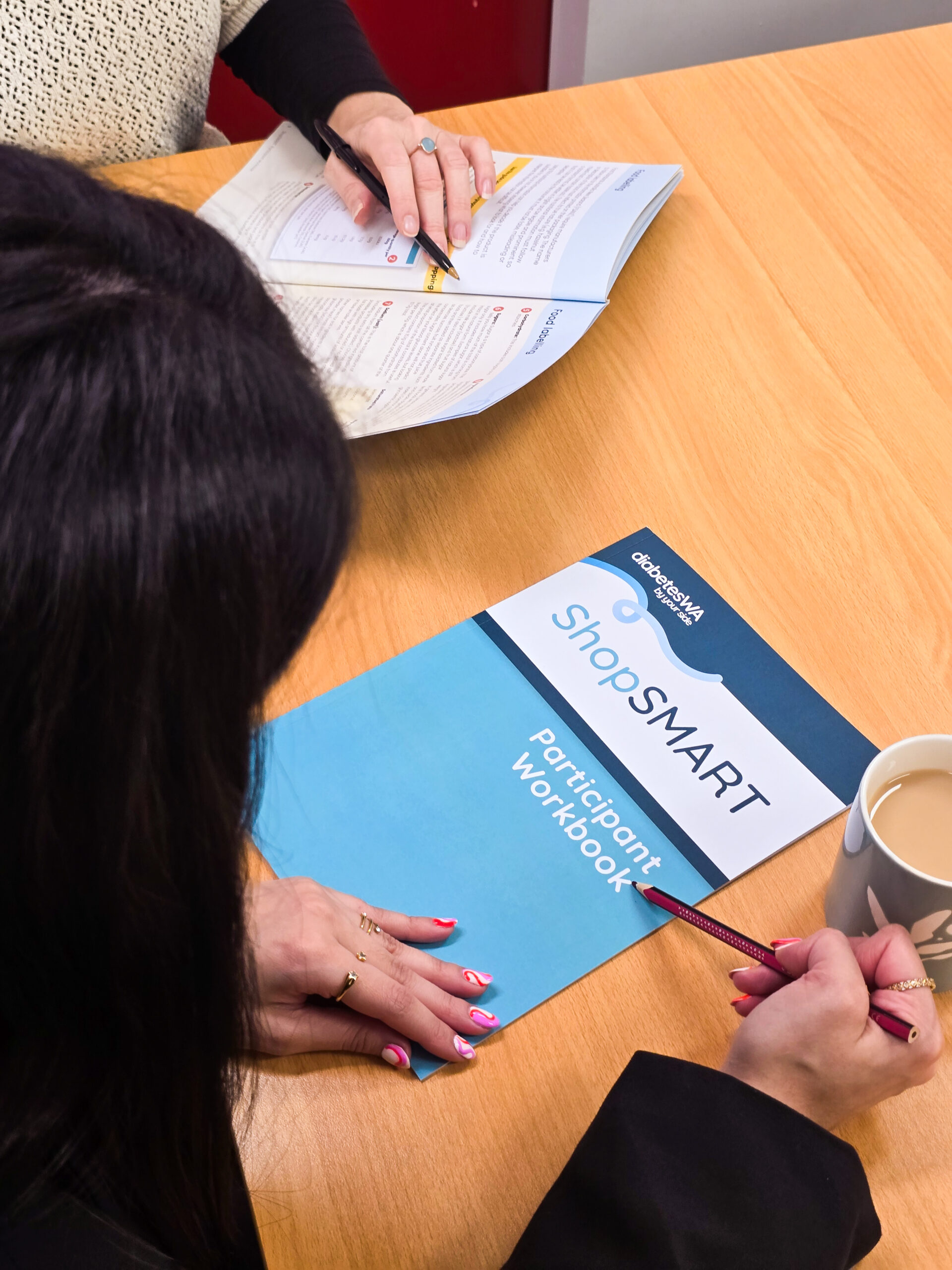
ShopSMART will help you make more confident choices at the supermarket. Learn how to read food labels, compare products and choose foods that support your diabetes and overall health. For people living with all types of diabetes.
MedSMART helps you feel more confident with type 2 diabetes medications. Learn how diabetes medicines work, how to take them safely, what side effects to look out for and how to talk with your health care team about any concerns you may be having. For people living with type 2 diabetes.