
FIFO worker SADE ELO tells us about managing type 1 diabetes while working long shifts in remote Western Australia.
A typical day on-site for me starts when I wake up between 3 and 5 a.m., depending on my shift. Then it’s a full 12-hour workday. From the moment my day starts, managing my diabetes is always at the back of my mind. I’m thinking about how I’ve slept, whether I’m drinking enough water, how hot it will be on-site, what I’m eating, how active I’ll be and how much insulin I need.
I’m 35 now and was diagnosed with type 1 diabetes when I was three, so diabetes has been part of my life for as long as I can remember. My parents helped me a lot at first, but growing up in Finland, I was taught to be independent from a young age. That helped me become confident managing my diabetes on my own and trying new things, like working on a cruise ship. So, when FIFO work came along, the lifestyle wasn’t completely unfamiliar.
When I first moved to Australia, I wanted a job with a lifestyle I already knew. FIFO had a similar one-week-on, one-week-off schedule to working on a cruise ship, and since I enjoy new experiences, I thought it could be a good fit for me. I now work in exploration utility, which can take me to some pretty remote locations.
But whenever I try something new, I have to figure out how my diabetes will fit in. I always ask myself,
‘Is diabetes going to stop me?’
While I was deciding if FIFO was right for me, I met someone else with type 1 diabetes who also did FIFO work. He showed me that FIFO with diabetes was possible and gave me tips, like seeing a GP before my medical clearance to get the paperwork I needed.
Those first couple of swings (time on-site) were about figuring out how my body would handle FIFO life. With 12-hour shifts, I had to learn how different tasks affected me. I wasn’t tied to one role. Working in exploration utility meant I moved between different tasks, from working in the kitchen to cleaning offices and rooms, so I was always on my feet and moving.
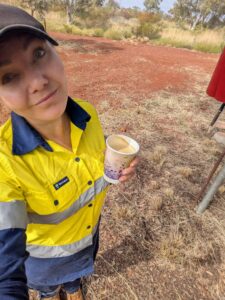
I’ve always been active and go to the gym regularly, so the physical side of FIFO wasn’t a big change for me. I find that all the walking and activity on-site helps balance my blood glucose levels. Using an insulin pump also makes it easier to adjust, and sometimes I need less insulin when I’m working.
The hardest part for me has been getting used to the changing sleep schedule. I’ve learned that being prepared is the most important part of every swing. I always double-check my supplies and carry a spare sensor, test strips, extra batteries, extra insulin, and backup injections just in case something goes wrong.
The medics and anyone who needs to know are aware that I have type 1 diabetes, and I’ve even left backup insulin at work to be safe. I always keep energy gels in my pockets in case I need fast-acting glucose. I want people to be aware, but I don’t want to be treated differently or babysat.
Working FIFO can mean you’re quite remote, with limited access to emergency services. I’ve managed my diabetes for a long time and haven’t had any major emergencies on site, but if something did happen, I would call our emergency number.
If I have a low blood glucose level that I can handle myself, I’m comfortable managing it. Something more serious, like DKA, would be different. I’m not sure what treatment is available on-site and, depending on our location, getting off-site might mean leaving by helicopter.
Everyone’s experience with diabetes is different, and what works for me might not work for someone else. But if you pay attention and learn how your body reacts, I don’t think diabetes should stop you from trying something new.
My next adventure is already in the works. I’ve bought a van and want to travel and live in it, so now I’m figuring out how to manage my diabetes on the road, especially how to keep my supplies safe in the heat.
I’ve always had a bit of a ‘you only live once’ mentality. Diabetes might mean I have to plan more and think ahead, but I still want to be brave, try new things and live my life. I don’t want diabetes to hold me back.
Living with type 1 diabetes?
Come along to our Type 1 Tech Night from 6.00pm – 8.00pm on Monday 12 October 2026 at Shirley Strickland Sport and Community Pavilion, Ardross.
We’re bringing together leading diabetes technology companies, credentialled diabetes educators and people living with type 1 diabetes. You’ll have the opportunity to ask questions, explore the latest technology and hear from others living with type 1 diabetes.
Book your free ticket here.
Have questions about managing diabetes at work?
Our credentialled diabetes educators are here to help. Call the Diabetes WA Helpline on 1300 001 880 for practical support and information.
Disclaimer: A diagnosis of type 1 diabetes does not automatically prevent someone from working in a FIFO role. Employers should consider whether a person can safely perform the requirements of the role rather than making assumptions based on their diabetes diagnosis.