
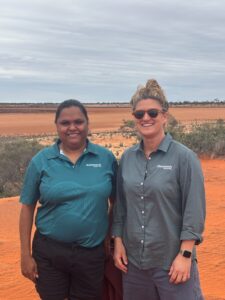
Team members SARAH KICKETT and SHERIDAN SIMPSON report back on their time at Camp.
In August, we were invited to join the Back to Country camp in Leinster. This annual camp is the work of sisters and Tjiwarl Elders Colleen Berry and Vicky Abdullah of the Nyunnga Ku Aboriginal Corporation.
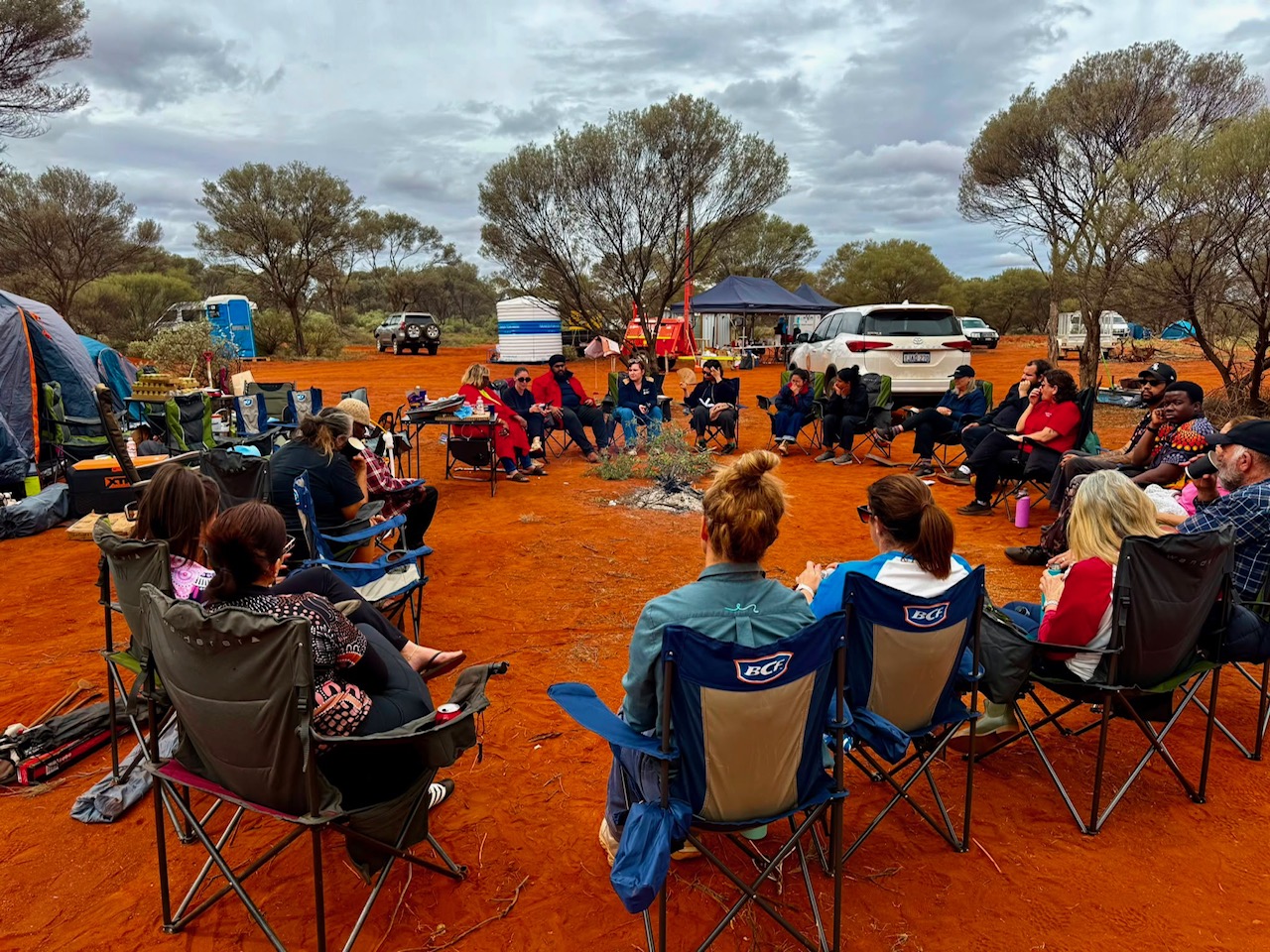
Based out of Leonora in the Northern Goldfields region of Western Australia, the gathering brings together Elders, families, kids and service providers for cultural learning, healing, and knowledge sharing on traditional Country. Being away for a few nights is a chance to talk to colleagues from other services around the state and learn together through storytelling and learning activities.
Tuesday
We flew to Bellevue, where the local bus driver picked us up and took us to the mine site, where we stayed in a donga for the night.
Wednesday
We got to camp and set up our tent. Joining us this year were around fifty people, including families from as far away as Kalgoorlie, other health professionals and, of course, Colleen and Vicky, who established the camp.
We settled in and chatted to colleagues about their work. After morning tea, our first activity with the kids was learning about good bacteria with the Kids Research Institute Phages team, Liz, Amy and Dr Anthony.
The kids learned about hand hygiene and good and bad bacteria with the help of blue lights that showed them how hand sanitiser and washing can kill off the germs that make us sick.
We also foraged for herbs and turned them into bush medicine. The children in particular, who had travelled from as far as Kalgoorlie, were very engaged in these hands-on learning activities. In the evening we cooked steaks and yarned by the fire, then got an early night.
Thursday
We started the day with hot showers, which was great as we thought we’d be going without for three days.
We then hiked to Lake Miranda, which is known to the Traditional Owners as Katawili. It’s a site of cultural significance to the local Tjiwarl people, and we listened to stories about its meaning. After this we visited a local cemetery and saw plaques for those lost their lives in mining accidents, mainly in the early 1900s.
Here we also saw a memorial to a family member from Colleen and Vicky’s mob, who was a member of the Stolen Generation and removed from her family. Her remains were DNA-tested and traced back to her family, who were able to bring her home, which meant a lot to them.
In the evening we gathered firewood, cooked some roo tail and roasted marshmallows on the fire, which the kids loved.
Friday
On Friday we went hunting for the Karlkurla silky pears that give Kalgoorlie its name. They are a climbing vine and taste like little figs. We did some climbing and exploration and it was beautiful being out on Country and seeing the deep colours of the red dirt, the green of the palms and the vastness of the land. We also visited a special site, Palm Springs, which is a natural water spring.
In the evening we had another barbecue, yarned and sang songs around the campfire.
Saturday
We packed up in the rain and then Sheridan and I drove to Kalgoorlie, where we hung out and saw the local sites, soaking up the history of the town.
This year, the highlights of camp were definitely connecting and networking with the organisers and talking to health colleagues and learning more about the work they are doing across Western Australia, and what brought them to camp this year.
It’s a good way to get to know people and share stories and ideas in a more relaxed environment.
The Country there is so beautiful and we are grateful to the organisers for the opportunity to spend time there together.
Want to learn more about our resources and culturally safe education for Aboriginal communities?
Visit our Aboriginal Health page to get in touch with the team – we travel around the state and can offer education and training to health professionals and communities.